Healthy land, healthy people
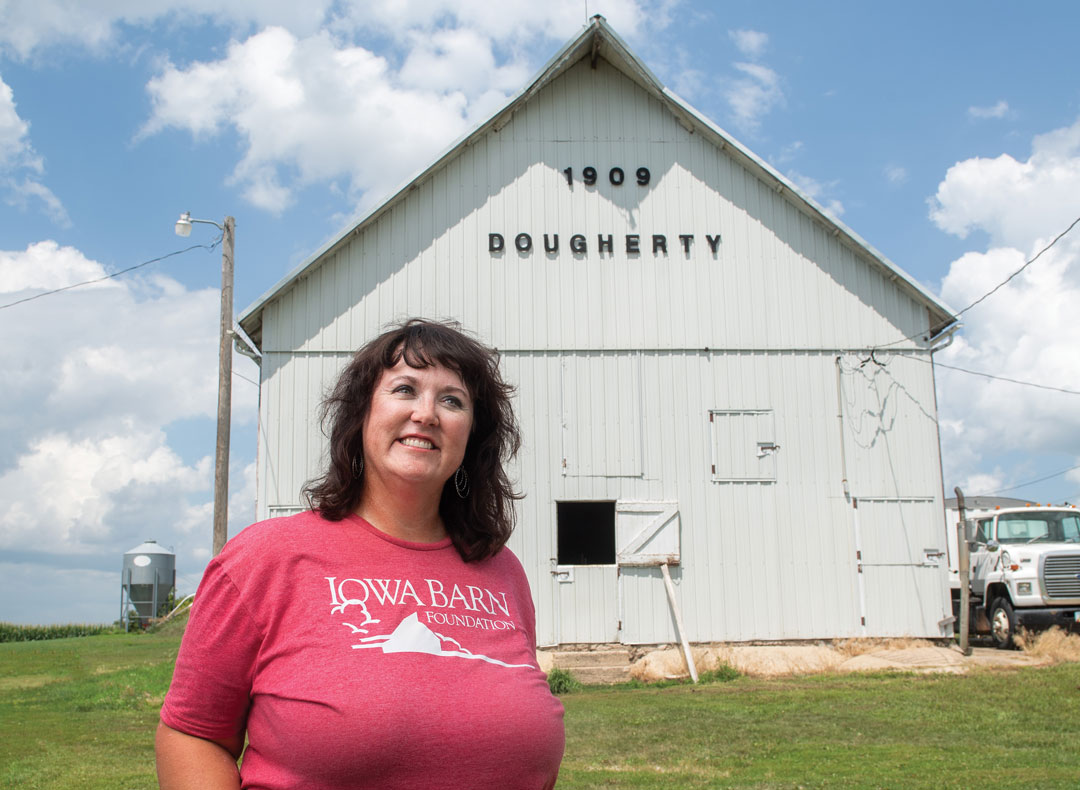
How Darcy Maulsby has forged a career in agriculture
As told to Macey Shofroth | Photo by Duane Tinkey | Illustration by Kate Meyer
Darcy Maulsby is a child of the farm crisis.
Her family has farmed in Lake City, a small northwest Iowa town, for five generations. She was trying to decide what she wanted to be as she grew up in the 1980s when Iowa farms were struggling through an economic crisis. She and her peers were told to go to college and get out of rural Iowa. “There is no future for you here,” they were told.
“‘This is too hard, things are too tough, just go to college, get a good job and move to the city,’” Maulsby said. “I took it to heart.”
Maulsby pursued a degree in journalism, specializing in agriculture at Iowa State University. She worked in agricultural journalism in Des Moines when another economic crisis, the early 2000s dot-com crash, culminated in her being laid off.
Unsure of her future, she started a freelance writing career, moved back to her hometown and never looked back.
Maulsby shared her experiences picking herself back up and making her name as a woman in agriculture with Fearless.
The following story has been formatted to be entirely in her words, and has been edited and condensed for clarity.
The thing to me about being fearless is it’s not a once and done thing. It seems like you feel like you conquer one mountain, but then life always throws a curve at you. So there’s been multiple times when I had to be fearless.
One of the big ones was when I lost my job at AgWeb when I hadn’t done anything wrong. I’d been working for AgWeb.com as an editor and then I got laid off by the whole early 2000s dot-com crash. I was six years into it, liked what I did and did a good job. And then all of a sudden, you go through a layoff. I was newly married, we had a house down by Granger and so you just think, “What am I going to do?” Nobody tells you how to prepare you for a layoff, and I never expected that it would happen to me.
I tried to be a good girl and follow all of the rules, and all of a sudden now I’m barely getting by with unemployment. I just thought, “I don’t know if I want to go back to corporate America, because I followed the rules and I got my butt kicked.”
As a writer, you always kind of, in the back of your mind, entertain this idea of being a freelance writer, but I really had no idea what that entailed. I didn’t know if it was possible. Around that time, a guy named Peter Bowerman had written a book called “The Well-Fed Writer,” where he talked about how you can actually make a living wage being a full-time freelance writer. That was a novel concept. It is tough to make a living as a writer, but he was talking about how you can go after more corporate clients.
I was blessed at the time because my neighbor was the marketing director for Iowa Realty. We were talking one day about my situation, and she said, ‘Well, I always need some freelance work. Would you want to write some of these stories for us?’ I said absolutely. So between that and a farm newspaper out of Fort Dodge called Farm News, I didn’t have much, but I had a little bit that I could piece together week after week. Having a marquee client like Iowa Realty on your resume helps a lot. You just kind of build it one step at a time.
We didn’t have children. We didn’t have a ton of expenses beyond the house and student loans, all the things young people tend to have. But it was manageable because when you’re young, you can do these things easier. I tell people, go broke before you’re 30, because you’ve got time to recover. And you learn a lot from it. It is not the end of the world if you play your cards right.
We decided to move back to Lake City. I had a feeling of, “I have no other option. I have to do this. I have no out.” The farming thing is an interesting angle because my dad was not really overly encouraging me to do hands-on production agriculture, so I guess I just never even thought that it was an option. It was never part of the plan. But then he passed in 2019. Then we started getting more interested in regenerative agriculture, and that’s not the way he farmed. So I didn’t have a lot of background in it.
James Hepp is a part of a group of farmers that’s pushing for better farming practices and water quality in the state. He’s a first-generation farmer, so he looks at everything through a different lens. He was doing more with cover crops and no-till farming, and I was seeing it work on acres in this part of the world, and it’s like, “Well, if he can do it, we can do it, too.”
I’m really passionate about soil health and how we can farm profitably but still protect the wild, water quality and soil. I’ve been able to take a lead role on this farm because I’ve spent a lot of my career learning about that type of farming. Now to be able to implement those practices is really exciting.
Regenerative farming is one of those things that has a lot of different definitions. To me, it’s trying to farm in harmony with nature. It could be organic, but on our farm, it’s not organic. It’s basically putting soil health at the crux of everything we do. My main decision with every management decision is, “How is this going to affect those beneficial microbes in the soil?” Because if we take care of those microbes and the earthworms and all the good things in the soil, then our crops will perform better. And healthy crops lead to healthy livestock, which leads to healthy people.
Switching over to that style of farming is more of a mind shift. We do need some different equipment, but that’s why teaming up with James was good because he’s got the equipment. I didn’t have the mindset shift that’s so hard for a lot of experienced farmers because like any of us, you just get used to doing things a certain way. Frankly, there’s peer pressure to do things a certain way. I didn’t have any of that because I didn’t come from that world.
I know the excuse is, “change is hard.” But you know what? My whole life has been change. I don’t really take kindly to the “change is hard.” Be fearless. When you farm more in harmony with Mother Nature, it will put money back in your pocket, too.
I’m kind of an anomaly in a lot of ways. I’m female, which that’s not that unusual anymore to be a female farmer, but the fact that I’m the age that I am. I’m 52. You’re not usually a beginning farmer at that age. Nobody expected anything out of me. It’s like, “Oh she’s just the newsletter girl or the freelancer girl that we don’t even really know what she does.” No one expects me to be a good farmer. But it’s OK because I’ve spent 30 years of my career writing about agriculture, being around it. Now I get to practice what I preach and it’s just like: Watch me. Watch and learn.
I just had to learn to be tough because the guys don’t cut you any slack, and they shouldn’t. I’m not asking for special treatment just because I’m female. It’s a rough and tumble world. I learned that early on with my dad. One time, I was feeding hogs, and it was real muddy. My foot came out of the boot and the boot stayed in the mud. I lost my balance and I pitched face first into the mud and manure. And those hogs just trampled me. I’m screaming and carrying on. My dad was up here and he heard all the ruckus, and he comes down and takes one look at it and said, “Be a man.” So I look at toxic masculinity a bit different because to me it’s just grit. He could have babied me and said, “Oh, my poor little daughter.” But you know what? Life is tough, and if it’s not a hog knocking you down, it’s going to be someone else trying to knock you down. You got to get back on your feet.
I took over just a year ago and started having a lot of hands-on management. That’s another can of worms, dealing with estate planning and trying to work out some issues where there were some things left undone that my dad should have done. That actually is one of the biggest problems we have in agriculture today. A lot of people do not do proper estate planning. These are multimillion dollar businesses and there’s too many people that just say estate planning is hard.
I got an award for being a leader in ag from Iowa State last December. They had a keynote speaker that was talking about estate planning and she said, “How many of you in this room think farm estate planning is really important?” Every hand goes up. Then she says, “How many of you in this room feel like you have a really solid, workable, practical plan ready to go right now?” About two people raised their hands, and I was one of them.
You do have to have some tough conversations sometimes. There’s a lot of this process that’s not easy. These are multi-million dollar businesses we’re running. There’s nobody at Principal Financial or any of those places that would ever allow that slipshod of a transition plan to happen. Talking about being fearless – do not be afraid to tackle these issues head on. You need to do it sooner rather than later. There might be tears and there might be anger, but you know what? The sooner you start, the better it’s going to be. And the whole point is, we want to leave a legacy here.
We’re trying to create a pathway for that next generation. I don’t want people to be shut out of farming like I was and my generation was, because we need farmers, and I think we’re really at the cusp where we could be running short on farmers. The boomer generation, a lot of them are still hanging on, but they’re going to be phasing out in the next five to 10 years. Generation X, we were the ones that were told during the farm crisis years, “Leave.” So we did.
For years, basically my whole career, we’ve spent more time teaching people to work for agribusiness than in production ag. At some point, this all comes back to needing farmers on the land. So the more I can do to teach people how to be smart but fearless with their estate planning, how we combine conservation and water quality with productive farming — these are the pathways forward so that people can continue to have good, solid careers in these rural communities and keep these farms going, and not just keep them going, but be prosperous, too.
It’s the whole “light the candle and pass the light on to the next person” thing. I tell people I’m more excited now than I’ve been in 30 years of an ag journalism career because people are seeing what this potential is of keying in on soil health and making agriculture even more productive.
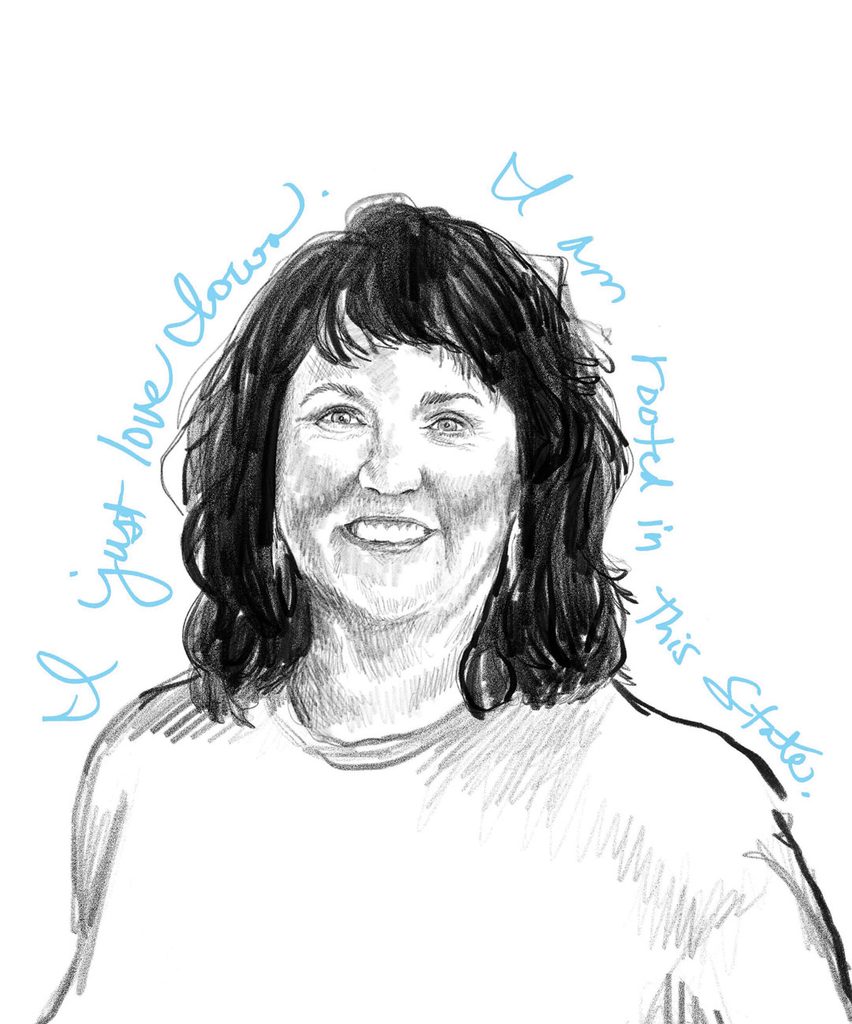
I just love Iowa. I am rooted in this state. Fifth-generation farmer here. I look at it as a tremendous gift, and it’s actually a big responsibility to try and do right by all this and carry it on. The fearlessness is that you know no business is guaranteed to the next generation. We’re trying to create a path forward so that families can have their own path forward. It’s exciting to be able to have those opportunities not to only build on the past but to envision a really strong future for Iowa.